Read Our Employee Interview
Juvenile Justice Spotlight
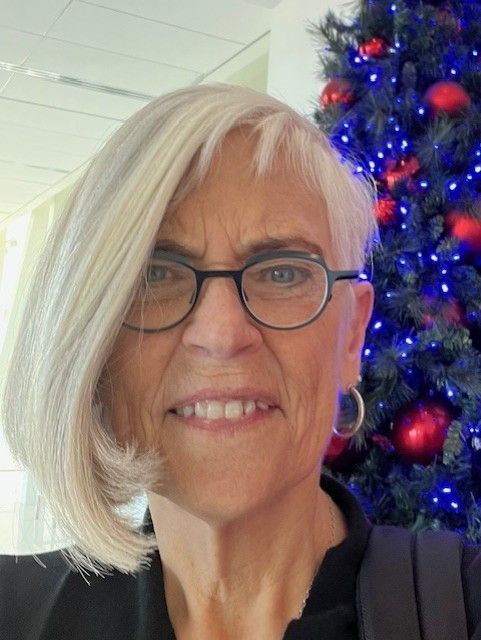
Carol Cramer Brooks
Senior Advisor, Staff & Program Development Consultant
Agency: National Partnership for Juvenile Services, Juvenile Justice Associates, LLC
Location: Kalamazoo, Michigan
1. In reviewing your bio, Carol, there are so many different places we can begin. At the Center for Research and Professional Development at Michigan State, for example, you co-authored two training curricula, ’National Training Curriculum for Educators of Youth in Confinement’ and the ‘Detention Careworker Training Curriculum, 3rd Edition’. Tell us how the research and efforts you put into the curricula, helped you going forward?
“These two projects as well as all my work at CRPD helped me to refocus my career focus. Up to that point, I had been a practitioner in the facilities, so when I moved to Michigan State, my focus shifted to developing staff. It was a hard transition because I had done the work with youth for such a long time, and I have such a passion for these youth. But it also recharged my efforts, as it provided me with the opportunity and challenges I continue to enjoy.”
2. You’ve had an extensive and impactful career in juvenile justice. Is there one job that really stands out to you?
“I think it would be my current role. I like to think that each job has provided a foundation for the next. I’ve been consulting for NPJS long before there was a formal consulting pool. These experiences have allowed me to realize there is a culmination of all the jobs I’ve had along the way, which has helped me become a better consultant.”
3. What is the most exciting part of your current role?
“Two things, when our efforts come together and work. When you’re working closely with the agency that’s contracted with us and moving the project forward, it’s exciting to see the process work and work well. The second and most exciting thing, though, is that I’ve been able to help develop teams of the new generation of juvenile justice leaders. The embedded staff teams and the NPJS Consultant Pool have been so much fun as they have allowed me the opportunity to watch them grow and develop as consultants and leaders.
When the NPJS Symposium was in Greensboro, NC (2018), we convened the past presidents of the National Juvenile Detention Association to celebrate these amazing individuals and NJDA’s 50th year. The next week, I was facilitating a leadership development training and found myself amongst a group of equally amazing future leaders in juvenile justice. I challenged them to ‘step up’, to continue their education, keep growing, and to get involved. Today, several individuals from that training session have done just that, they are doing great, impactful work with NPJS."
4. You are a mentor to so many people. Who was your mentor?
“Dave Roush and Earl Dunlap, no hesitation. I first met Dave Roush when I was teaching at the Kalamazoo County Juvenile Home. That relationship has evolved over the years from mentor to boss to colleague to friend. One thing, however, that hasn’t changed is that I continue to learn from Dave and know that I am a better juvenile justice consultant because of this learning.
Among his many roles, Earl Dunlap was the first CEO of NPJS and the federally appointed transitional administrator of the Cook County Juvenile Temporary Detention Center. During this time, Earl taught me how to operationalize the knowledge and put theory into practice. I continue to speak with Earl about this very issue and value his advice and guidance.
Earl and Dave allowed me to 'hook my wagon' to their journey. There were certainly others who helped me along my career path (in fact, too many to list), but those two are the reason I’m speaking with you today. I am truly grateful."
5. In either your current role or a previous one, what is your one experience that stands out as your favorite or most memorable?
“Noooo (laughs). In 44 years, there have been so many favorite and memorable moments, moments that have been fun, interesting, and challenging, that I can’t narrow them down to just one.”
6. Whether it’s a co-worker or the youth you’ve worked with, what is one consistent piece of advice you find yourself giving?
"Every day is a new day. That was true for kids in the detention facility, as I would remind them each day that they get to start over. But it also applies to staff. Every day is a new day; just because something didn’t work yesterday, it doesn’t mean it can’t work today. I remind the members of my consulting teams to go into the day with a plan and not respond to every 'crisis of the moment' in the facilities. At the end of the day, assess your work and decide to keep the plan, or adjust it for a new day.”
7. From your perspective, how can the current state of juvenile justice improve?
“Two things. I think we need to focus on identifying strong leaders and provide ongoing leadership development. While we have a number of tremendous people in those leadership roles, we also have many people running facilities who lack a clear vision and, therefore, do not know where they are leading their staff. I feel we need to be more selective in who we choose to lead the field and facilities.
The other big one – and I’ve been saying this for years – is that we need to recognize 'bad' facilities that are harming youth and use every tool available to us to require them to fix the issues."
8. Who is Carol when she's away from work?
“I’m never away from work (laughs). It’s one of my negative qualities that has been with me my entire career, starting when I was a teacher. Teachers go home at 3, but the day is never over. You then have work to do to prepare for tomorrow. I think that I have carried that mentality into all my work in juvenile justice. The work is never done.
With that said, sports have played a very important role in my life. It was a great connection with my dad, who was my coach and supporter. To this day, I love watching sporting events and talking sports with anyone.
My Kalamazoo community is very important to me. My husband and I love going to local theatres and supporting local and university events.
Of course, there is my grandkids – I should have mentioned them first (laugh). They, and the rest of our family, are the reason we came back to Kalamazoo. We like doing as much as we can with them.”
9. Is there something you’d like to share that hasn’t been covered?
“I just want to thank NPJS for who they are and what they do. I love this organization. Over all the years that I’ve been involved with this organization, they’ve stood strong and true to their values, even when things were challenging. There is no organization more committed to improving the lives of juvenile justice-involved youth, to providing staff with the tools they need to do their work effectively, and to advancing the field than NPJS. Most importantly, I love the people in this organization. The networking, professional, and personal relationships I have gained from being involved in NPJS mean the world to me. Thank you."